Clue: There are multiple ways to sign the concept of "all" -- depending on
your meaning and context.
If you mean "all" as in "whole"
or "entire" then a good choice is the two handed / flat hands version of all.
ALL (flat hands version)
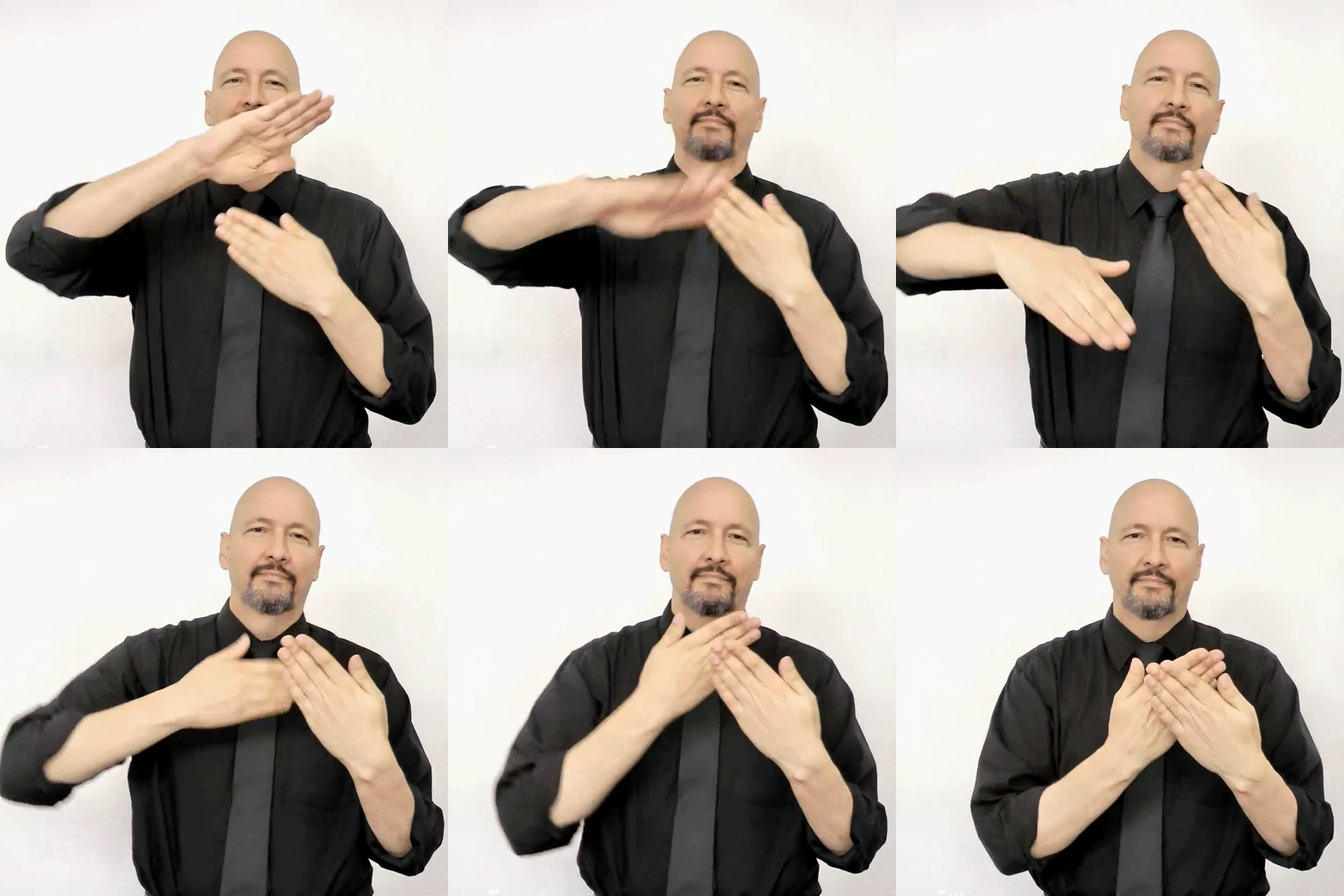
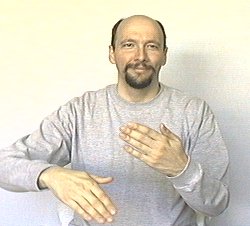
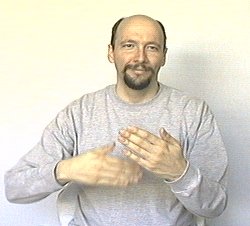
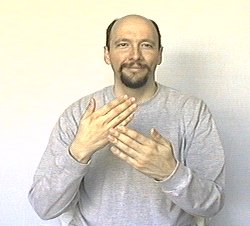
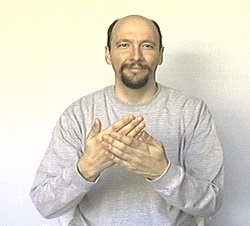
Memory aid: Imagine reaching into a bag of money and getting "all" the
money.
Another common way to express the concept of "all" is to fingerspell it.
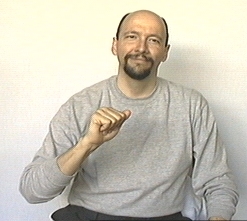

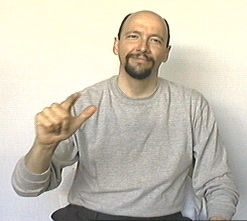
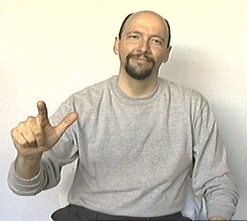
ALL (lexicalized fingerspelling version)
The fingerspelled version of "all" is sometimes glossed (typed / written) as "#ALL"
In ASL gloss, the hashtag symbol preceding an all caps word denotes "lexicalized fingerspelling."
Additional
information, examples, and discussion --
not needed for most
beginning level classes:
The word "inflected" can be thought of as meaning "to change or modify."
In ASL we sometimes inflect (modify) the way we do certain signs in order to
influence the meaning of the sign.
Signers know that large sweeping movements can often be used to create a meaning
of "all" or inclusive.
People have inflected the way they spell the word "all" by using a large
sweeping movement.
When a fingerspelled word and has been inflected and starts looking (or
functioning) more like a sign (and less like a string of letters) we tend to
refer to that as "lexicalized fingerspelling."
Due to the hashtag symbol having become popular in social media perhaps the Deaf
community will gravitate to using some other way of denoting (naming)
lexicalized fingerspelling. For example, instead of typing #ALL we could perhaps
type "ALL-[Lexicalized]" as in "The lexicalized
fingerspelling version of "ALL."
"Lexicalized" means that it used to be just fingerspelling but over
time it took on characteristics of a word and not just individually spelled
letters. The location moves, sometimes letters are dropped or only partially
formed. You can use the lexicalized form #ALL to mean the same thing as the sign
"ALL." Notice the # mark? When you see that in front of a
sign in an ASL book it means "lexicalized fingerspelling."
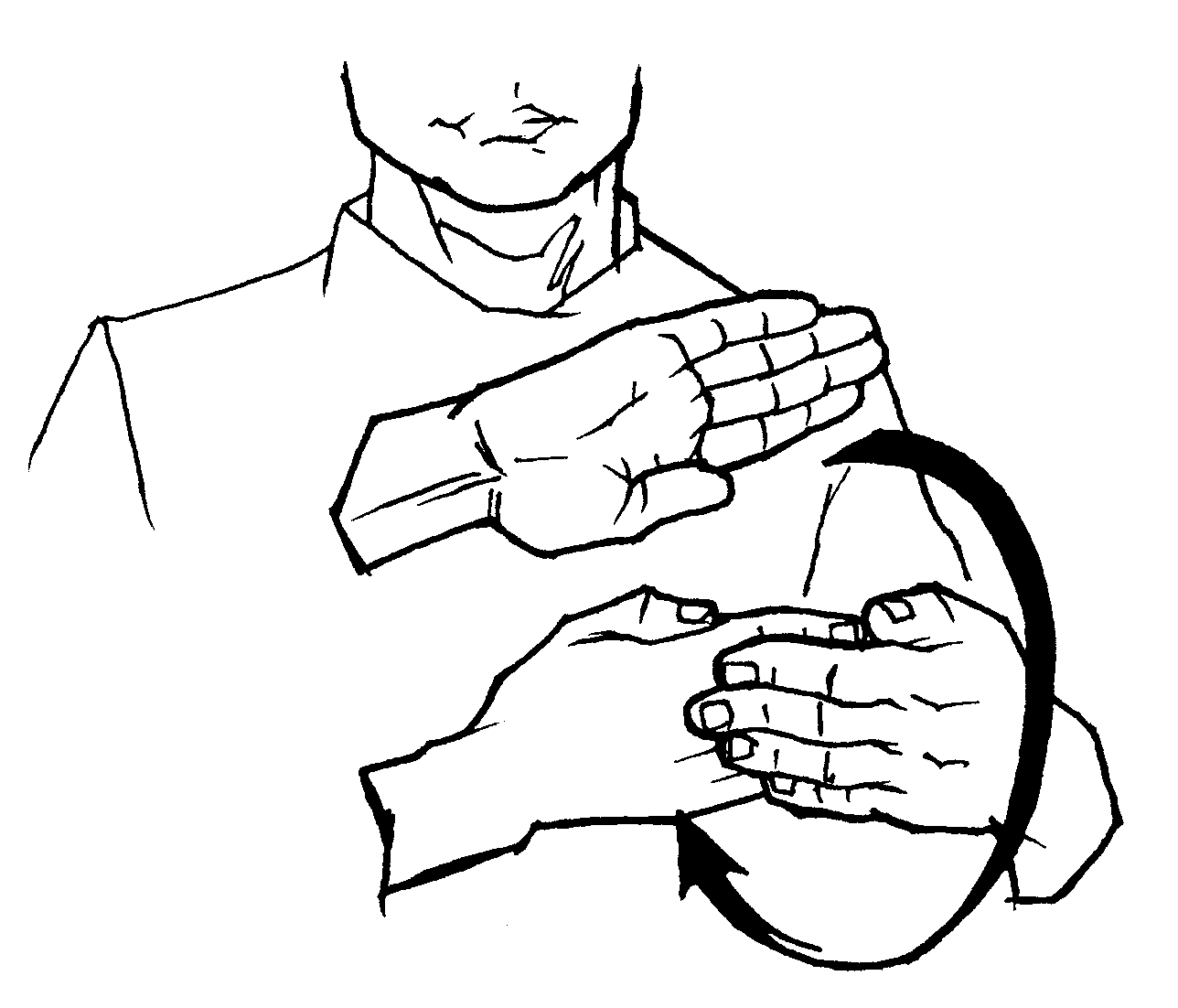
ALL-[Lexicalized / palm back version]
Note:
"Lexicalized" fingerspelled words used to be called "loan
signs."
Some people still call lexicalized fingerspelled words "loan signs"
but the term "loan sign" more accurately applies to signs that were
"borrowed" from other signed languages and became part of ASL.
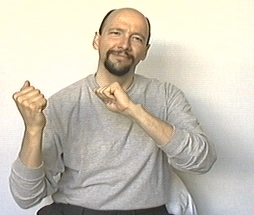
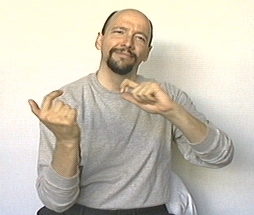
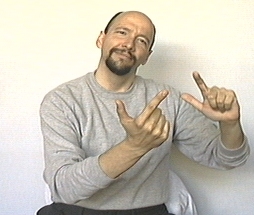
Below is another way to say "ALL" by using a lexicalized form.
Notice: I'm using two hands, more facial expression, and a larger movement
than in the previous version. This shows more emphasis. Sort of like
raising your voice and stressing the word "all" when speaking.
Animations
Animation 1: General sign for ALL:

Animation 2: #ALL-(one handed lexicalized version)
Animation 3:
#ALL-(two
handed lexicalized version)
Notes:
Sign: ALL - flat hands version
Synonyms: whole, entire
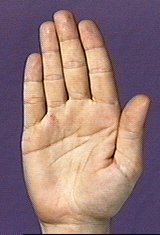
Handshape: both hands use a flat B handshape
Location: Neutral signing area in front of the body
Orientation: Palm orientation changes throughout the sign. In
general, the dominant hand is palm out at the start of the sign and ends up
palm back. The non-dominant hand is for the most part, palm back.
Movement: The dominant hand does all the movement in this sign.
The non-dominant hand stays fairly stationary.
Non-Manual Marker (Facial expressions and or body language): Neutral,
unless you are making a point that someone ate the "whole" pie or
a similar inflection.
Memory Aid: Think of reaching into a bag of money and trying to scoop
out "all" the money.
Interpretations: Whole, entire, complete...
Inflections: If you do the sign larger it could means things
like "every bit of it" or
"the whole thing."
Question: Is the lexicalized fingerspelling version of "ALL" a "directional
sign?" Is ALL-[Lexicalized] a "locative" sign?
Response:
Think of "directionality" as the ability of a sign to the use direction of the
movement of the sign to indicate such things as:
* who did what to whom, for example "me-GIVE-you" / you-GIVE-me.
* the starting and ending location of someone or something that has moved or is
moving: "MOVE-from-here-to-there"
Just because a sign has moves doesn't mean it is "directional."
For example the sign FLOWER can go from right to left or from left to right but
the direction doesn't change the meaning -- there fore it is not directional.
Compare the sign ALL-[Lexicalized] versus a truly directional lexicalized
fingerspelled sign such as BACK-[Lex] which can be used to mean "give it back to
me" or "I went back there" or even "the two of them got back together."
In general ALL-[Lexicalized] is "not" directional in the sense that we wouldn't
start spelling the "A" near the "subject" of a sentence and end with an "L" near
the object of the sentence.
Rather it is sequential moving from A through to the second L based on the
spelling of the English word "all."
What is fascinating about the sign ALL-[Lexicalized] is that it incorporates
features of "indexing" and thus can be inflected to show "clusivity.":
Compare:
Uninflected: 1. ALL-[Lexicalized] = "all of something"
versus
2. ALL-[Lexicalized]+IX-via-location-and-movement-path = "all of these" or "all
of those" (which can create an "exclusionary pronoun" as in "all of them"
(exclusive pronoun" / can exclude speaker and addressee)
versus
3. ALL-[Lexicalized]-[palm-back]-[circular-sweeping-movement] = "all of us" /
"we all" (inclusive pronoun / likely including both the signer and plural
addressees). Here we are seeing the use of palm orientation and sweep to
facilitate the creation of an "inclusive pronoun."
All signs are done in "a" location (and moving signs are technically done in
infinite locations). Being done in "a" location doesn't necessarily make a sign
locative. A sign becomes locative when the location in which the sign is done
creates additional meaning.
Thus if we set up a referent and do either of the common signs for "all" near
that referent doing so changes the meaning from:
1. "All" in general
to
2. "All of these."
It really is possible to do the 2-handed-flat-hands version of ALL in a specific
location (such as the area of a recently established referent) to mean "all of
these" (for example "The pantry is over there on the right. The hungry people
are over there on the left. Go to the pantry and get all the food and bring it
to the people."
Another example in which we could use the flat hands version of ALL in a
locative manner:
Or we have two groups -- how many are going?
The group on the left ALL -- the group on the right SOME." (Signed by first
leaning left then leaning right.)
Both versions of all (flat hand version and spelled version) certainly at least
partially overlap in meaning and usage.
We can make progress in understanding the differences by listing specific
instances where one version can do something that the other can't:
For example the flat-hands-ALL is more commonly associated with concepts such as
"whole" and/or "entire." Specifically if a signer is mentally thinking of the
concept "entire" and perhaps even mouths it a bit -- the signer is unlikely to
use the ALL-lexicalized' sign.
If the signer is going to indicate all of a non-dominant hand indexed item list
it the signer will probably use ALL-lexicalized and is unlikely to use
flat-hands-ALL.
Additionally, if a signer is drinking coffee or hot chocolate it is unlikely
that the signer will use the two-handed-ALL sign. (Heh.)
Notes: