FRENCH TOAST: The
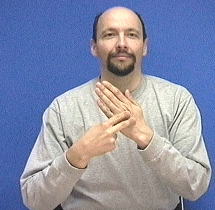
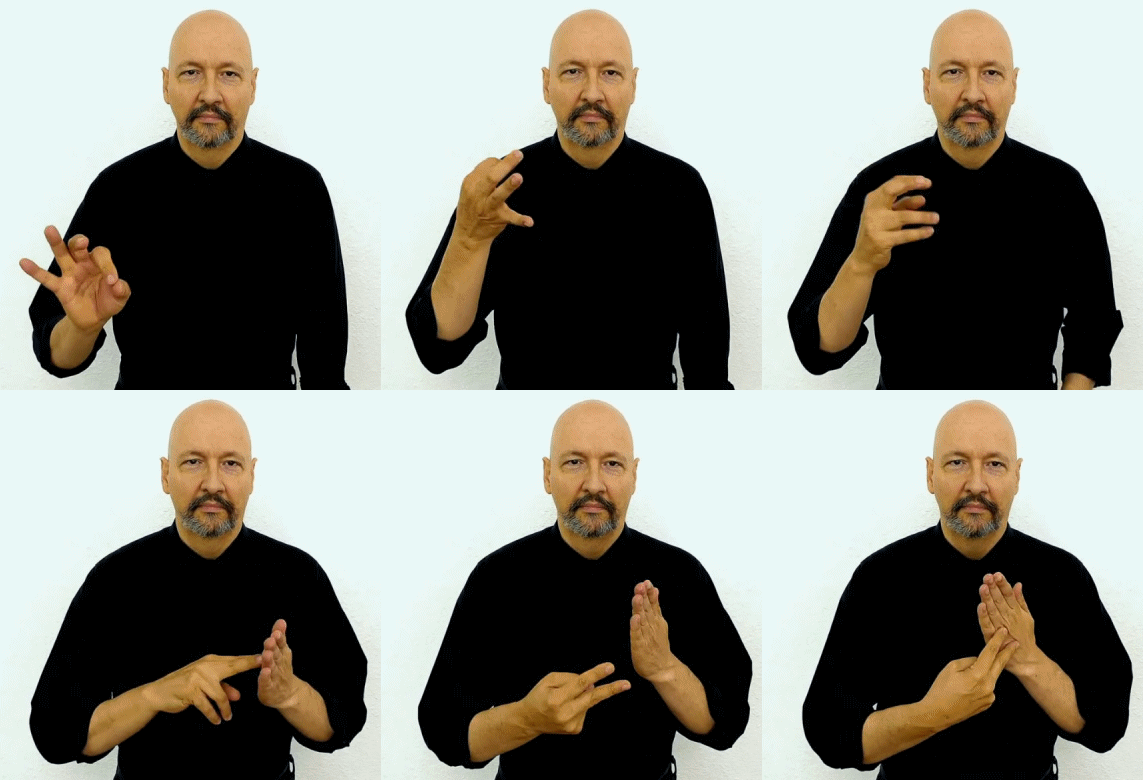
American Sign Language (ASL) sign for "French toast"
FRENCH TOAST:
This is a combination of the signs
FRENCH and TOAST.
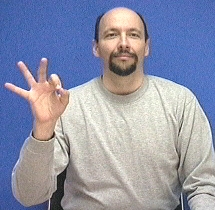
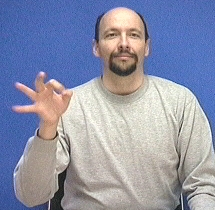
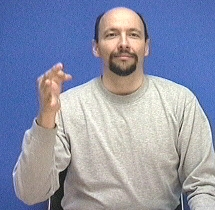

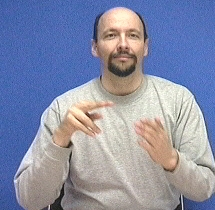
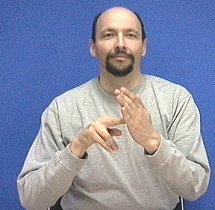
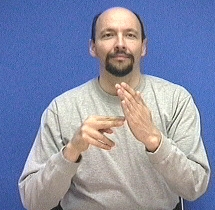
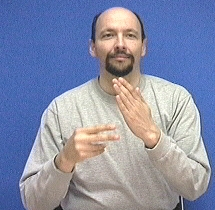
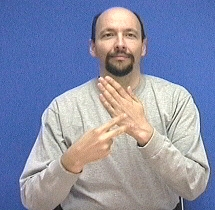
Sample sentence: How do you make French toast?
Notes:
See: FRENCH FRIES
COOK
A few thoughts regarding "FRENCH-TOAST HOW-MAKE": https://youtu.be/OkB-XtMYXCA
1. There are several ways to sign "French / France":
An inward twist (very common in ASL for many years)
An outward twist (very common in ASL for many years)
An outward (to the side) slide (still less common but seems to be gaining
somewhat in usage in ASL)
Interpreters should recognize all three.
2. The Lifeprint curriculum strives to use an interactive approach. Instead of
suggesting a student make a statement such as "I'm half French and half
Japanese" -- I'd rather the student use the vocabulary to ask another student a
question such as "How do you make French toast?" -- thus creating engagement and
opportunity for language use instead of simply getting an "Oh, I see" response.
3. The sentence FRENCH-TOAST HOW MAKE? provides an excellent example of a "wh-question
clause" in which the sign "HOW" can occur near the end of a sentence without
needing to be the absolute last sign in a sentence. This is similar to the
sentence: WATER, YOU DRINK EVERYDAY HOW-MANY CUP? People will try to tell you
that the HOW-MANY has to come at the end. It "can" but doesn't have to. How can
I make that claim? Because in real life ASL we often use clauses instead of
always putting the WH-concept at the end. For example, think about how you might
sign the question, "How many times did you go?" (Hint: You either drop the sign
TIME or you put it at the end). Also regarding the "EVERYDAY" sign in the above
sentence -- some will try to tell you that time signs "always" have to come at
the front -- but that is not the case when there is no "tense / time" confusion
in a sentence).
YESTERDAY, I WENT STORE.
I GO STORE EVERYDAY.
(However, if you are taking an ASL class from a teacher who has a narrow
understanding of ASL grammar then certainly do it the way your teacher wants
until you get the grade you want -- then go hang out in the Deaf community and
see how ASL is really done on the hands of community members.)
4. This sentence also provides an example of real life ASL usage of the sign
"HOW" in the preparation of food. Some teachers will tell you that you have to
sign COOK (not MAKE) when referring to food preparation. While that is a sticky
myth -- it simply is not true particularly when discussing preparation of cold
food items and or complex items like soup.
Notes: