Note, this sign doesn't mean "similar" or "same as." Instead see: SAME
The sign LIKE is used to mean "to enjoy or have an affinity for" someone or something.
As in: "I like it."
LIKE (version)
0:00 / 0:00
Notes:
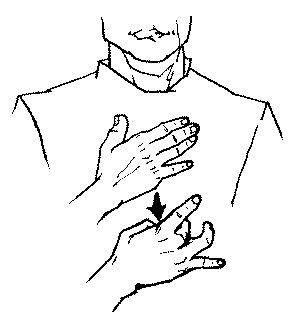
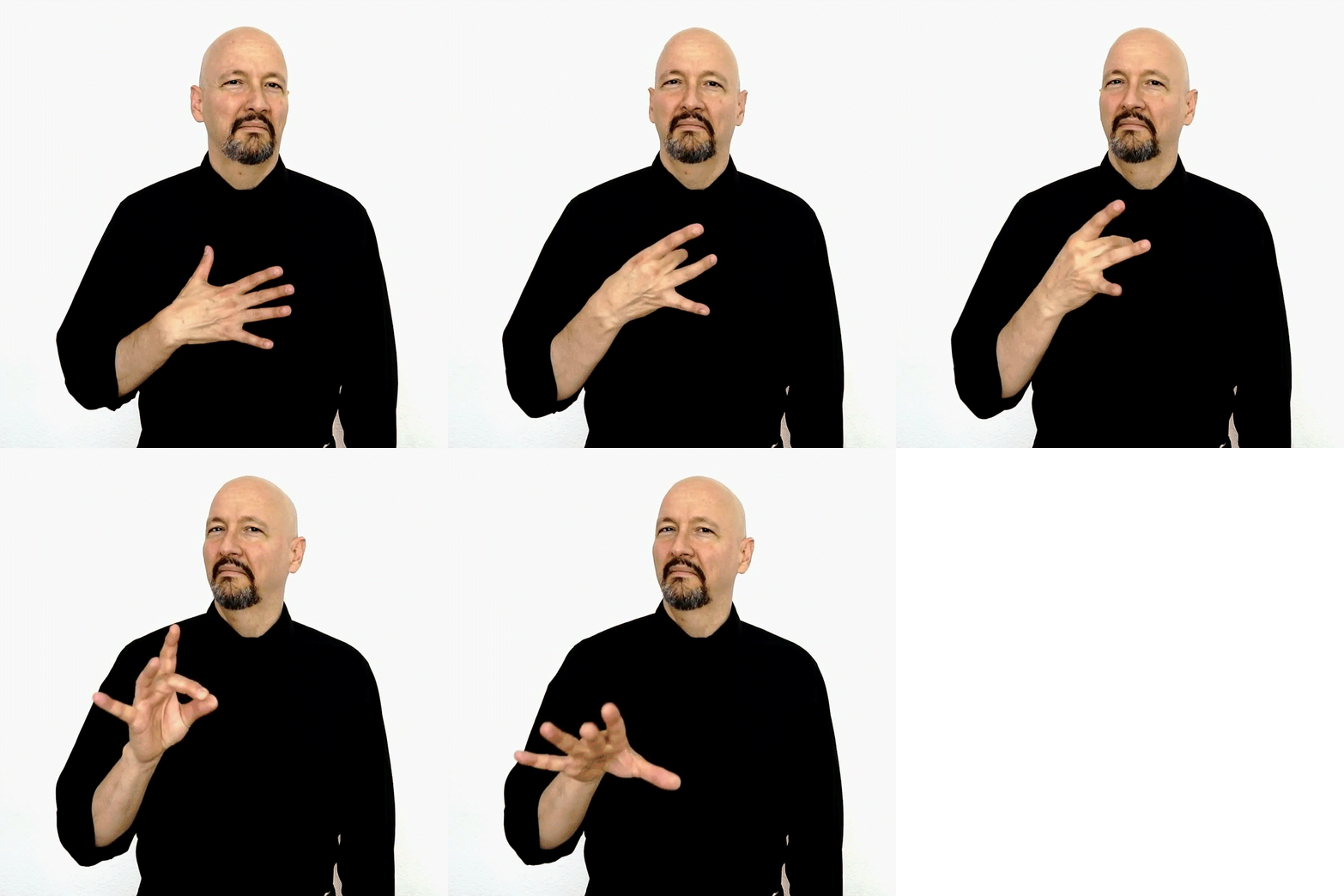
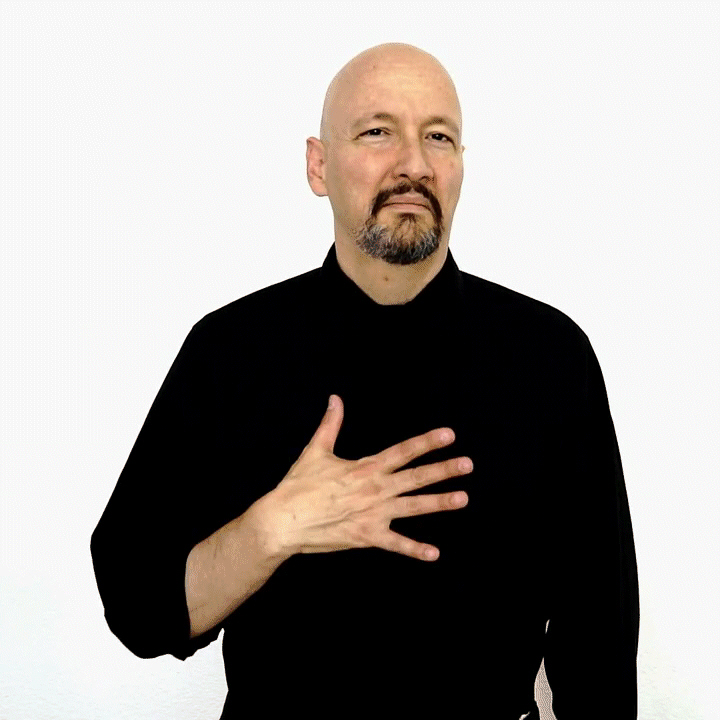
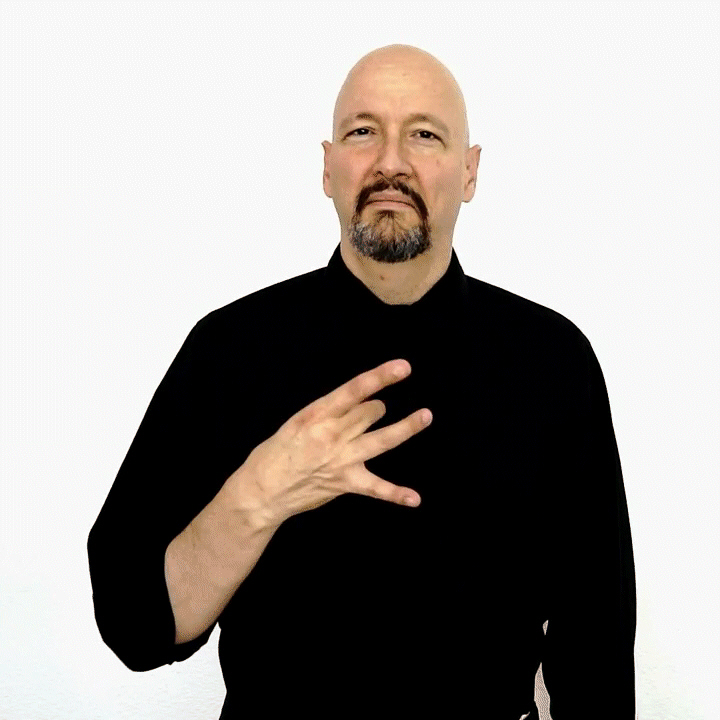
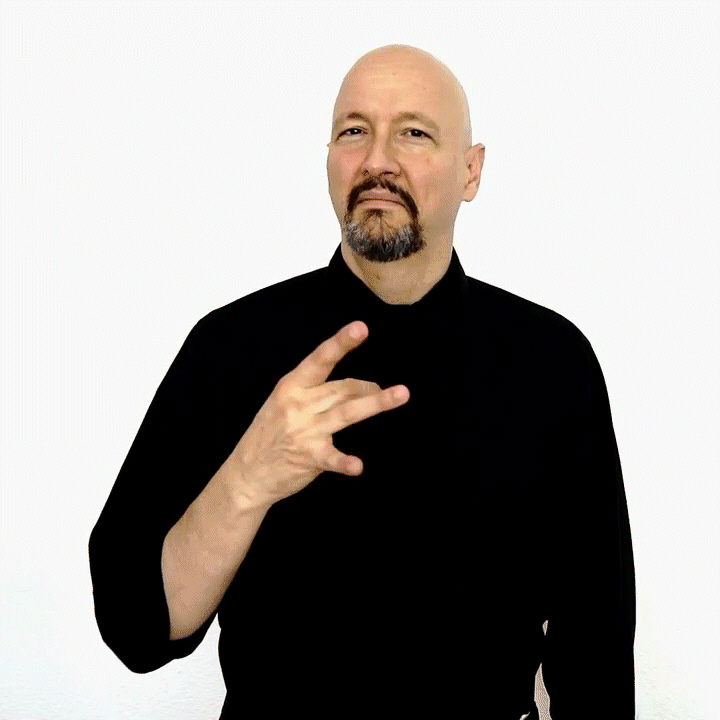
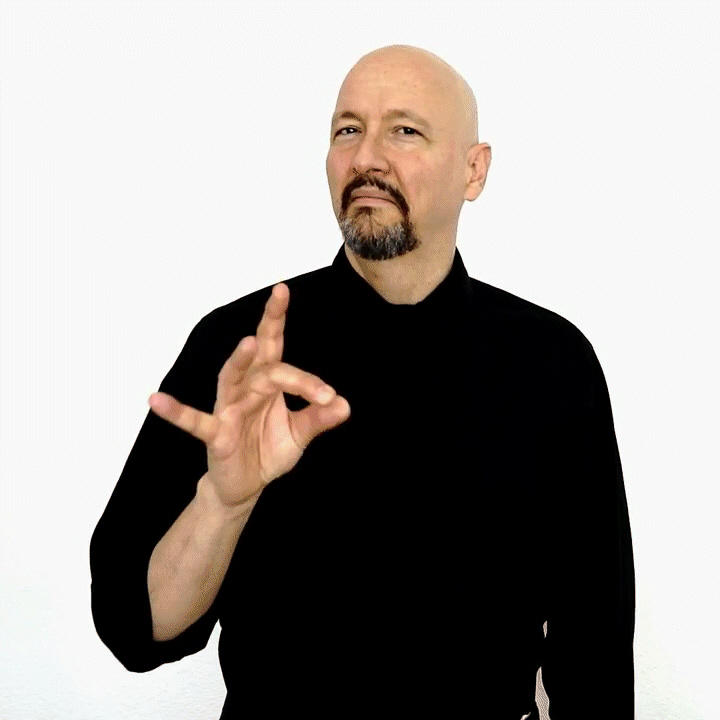
In the above sequence, the first picture is optional. Most of the time I start the sign a bit out from my chest with my middle finger and thumb pointing back toward my chest (but not touching either my chest or each other). Then I move the hand forward while bringing the index and thumb together.
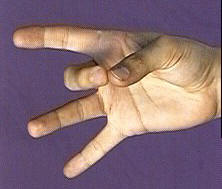
The sign "LIKE" ends up in an "8" hand shape. This is how it looks from the signer's viewpoint at the end of the sign:
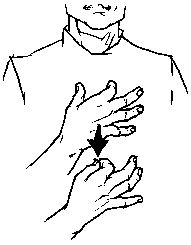
Another way to sign "like" is by placing both your right thumb and your index finger close to your chest. Extend your other fingers. As you move your hand forward slightly, bring your thumb and index finger together.
LIKE (variation) (not recommended)
Now, let's suppose I were signing the sentence, "What do you like?" Notice the wh-facial expression in the following example:

The sign for "don't-LIKE" uses what is called "reversal of orientation for negation."
0:00 / 0:00
Also see: don't-LIKE
Notes:
Question: A student asked: "I saw a sign that looked like "LIKE" but that used both hands?"
Dr Bill responds: That would mean "interested" or "appreciate." See: INTERESTED
Question: A student asked: How do you sign "like" as in, "She is like me,"?
Dr Bill responds: You use the sign for SAME. If you mean LIKE as in, "similar" as in the following sentence:
"This one is like/similar to that one," -- you should use a sign that means "same." See:"SAME."
LIKE: "for example"
If you mean "like" as in "for example" then use the sign "SHOW."
The English word "like" has several meanings. When paired with the word "what" as in the question "Like what?" the word "like" can mean, "for example." The ASL sign "SHOW" can be used to mean "for example." See: SHOW
Question: A student asks:
In ASL class the distinction between "DISLIKE" / "don't-LIKE" and "NOT LIKE" came up. It's briefly alluded to here: https://www.handspeak.com/word/5954/:
"One doesn't use the DISLIKE version in an ASL sentence such as "I don't like that!" Use NOT+LIKE instead in a sentence, for example, "IX-me [neg]NOT LIKE THAT BEHAVIOR![neg]"."
I was hoping for someone who understands the distinction to elaborate a little bit more about when each is appropriate. I'm also curious about the degree -- if someone used the wrong sign would it sound stilted or a little awkward or is it stronger than that?
Response:I totally disagree with the statement:
"One doesn't use the DISLIKE version in an ASL sentence such as 'I don't like that!' Use NOT+LIKE instead in a sentence, for example, 'IX-me [neg] NOT LIKE THAT BEHAVIOR! [neg]'."
Again, to be clear, I disagree.
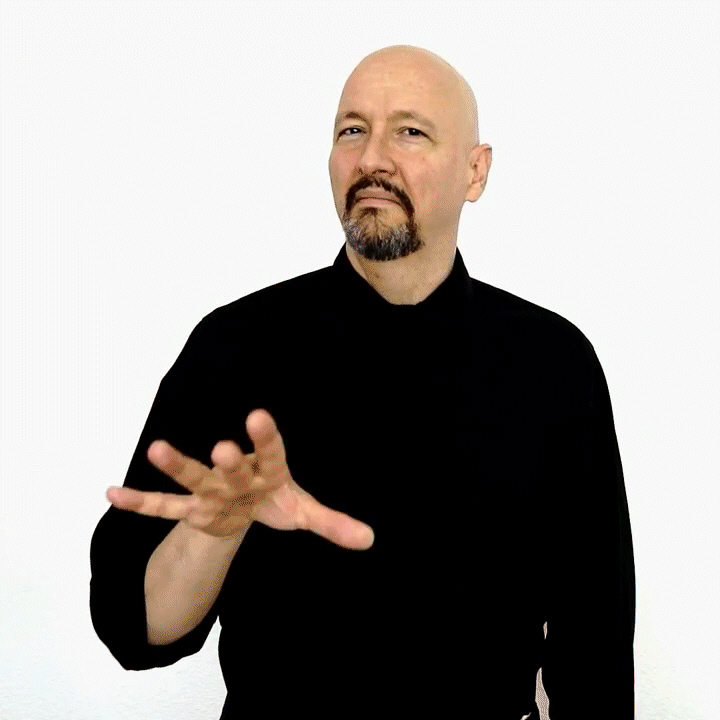
Why? Because the sign DISLIKE (which could also be typed as not-LIKE or even don't-LIKE in which the word "not" or "don't" being lowercased to show that it is not a separate sign but rather the meaning is incorporated into the capitalized sign as a process morpheme) is very commonly used in actual conversation by fluent / native ASL Deaf signers in sentences such as "IX-me don't-LIKE THAT"
See the 0:36 mark of https://youtu.be/-L3_lgFu2aw?t=35
See the 4:13 mark of: https://youtu.be/UZZJULND410?t=250
See the 7:35 mark of https://youtu.be/Lbv-4-tTnME?t=454
See the 2:09 mark of https://youtu.be/5kpJiAa0K50?t=128
See the 8:17 mark of https://youtu.be/E-HbVQdiYlc?t=496
See the 1:09 mark of https://youtu.be/PE3K6UwhH98?t=67
It is my opinion (backed up by repeated, frequent observation) that both structures are common in ASL:
1. IX-me DISLIKE THAT.
2. IX-me NOT LIKE THAT.
They are both so common that to claim one of them is "wrong" would lead me to ask: What do you base your opinion or claim on?
Anybody anywhere can claim whatever they want about the nature of ASL. "Opinions" are rampant in the ASL teaching and learning space.
How about we instead base our decision as to what is or isn't ASL by deciding that if a sign, structure, or usage is commonly used by typical a dult skilled socially active Deaf ASL signers when conversing with each other in everyday life situations -- then that sign, structure, or usage is in all likelihood "ASL."
I'm open to someone convincing me I'm wrong -- yet that would seem hard to do on this particular topic in the face of overwhelming evidence and a lifetime of interaction in the Deaf Community in which I have seen the "IX-me not-LIKE THAT" structure (using the LIKE sign paired with a reversal of orientation for negation) used thousands of times. That is not an exaggeration..





Notes:
Where this sign is taught:
Taught in Lesson 01.Reviewed in lessons: 05, 06, 07, 08, 10, 11, 12, 13, 14, 15, 16, 17, 18, 19, 21, 22, 23, 24, 25, 27, 29, 31, 33, 36, 38, 40, 42, 43, 44
Practice sentences using this sign:
YOU LIKE LEARN SIGN? (Do you like learning sign language?)YOU LIKE LEARN SIGN? (Do you like learning sign?)
YOU LIKE YOUR WORK? (Do you like your work?)
YOU LIKE SIGN WITH WHO? (Who do you like to sign with?)
PLAY, YOU LIKE what-DO? (What do you like to do for play?)
SIGN WITH FRIEND, YOU LIKE? (Do you like signing with a friend?)
YOU LIKE DRIVE? (Do you like driving?)
YOU LIKE EMAIL? (Do you like using email?)
fs-CHESS YOU LIKE PLAY? (Do you like to play chess?)
YOU LIKE GO MOVIES? (Do you like going to the movies?)
... and 116 more practice sentences use this sign.