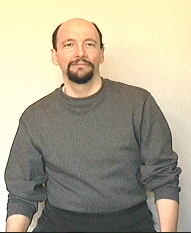
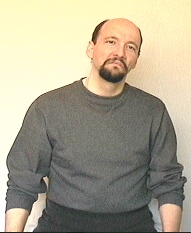
I generally express the concept of "or" by shifting my body from one side to the other. I call this a bodyshift." You don't go back and forth, you just shift one time while using a facial expression that expresses the concept of "or."
This "bodyshift" movement is a "nonmanual marker" (it expresses a meaning, but it doesn't require "hands").
Suppose you were asking me, "YOU WANT PIZZA OR HAMBURGER, WHICH?"
Instead of signing one of the versions of "or" shown below, you could instead just use a "bodyshift." You'd sign, "YOU WANT" in the normal position, then as you signed PIZZA, you'd sort of lean a bit to your right, then when you signed "HAMBURGER" you'd lean a bit to your left. This is ASL at its finest! If the person you are signing to is awake, you shouldn't even need to sign "WHICH" at the end of the sentence, but it doesn't hurt to add "which" if you want to convey that the person has to "choose one or the other."
OR-[bodyshift]
Sample sentence: Do you prefer pizza or burgers?
0:00 / 0:00
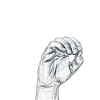
Another common way to sign "OR" is to sign the letters "O-R."
"Or" is a short little word, so it is very quick and easy to just spell it.
O-R:
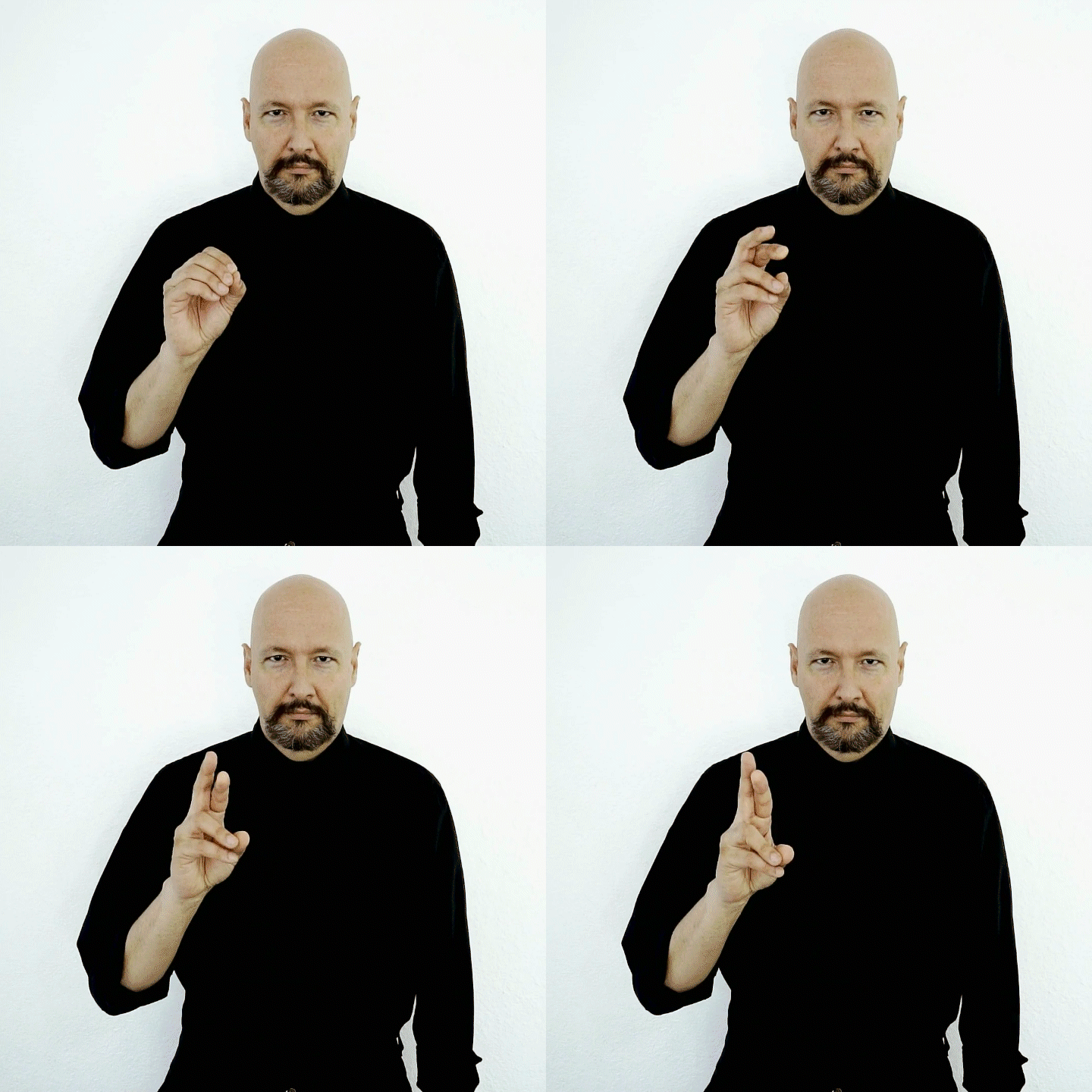
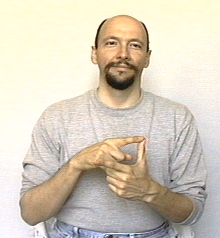
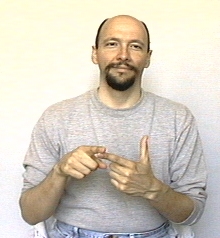
Quite a few people use the sign for "then" to mean "or." It has to do with the idea of presenting choices. Imagine someone saying "this or that" as they first touch their thumb, and then their index finger.
THEN = "or"
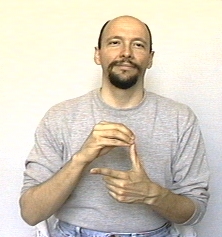
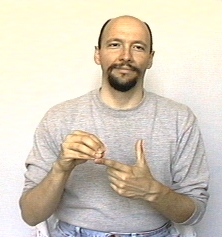
There is an initialized version of the sign "then" that means "or." Most adult native Deaf consider the initialized version to be Signed English, and prefer to instead use the sign for "then," bodyshift, or fingerspell "O-R."
This version is "not recommended" if you are taking an ASL test.
OR (initialized version)
Question:
A student asks:
If I wanted to ask if someone preferred hamburger, hot dog, or sandwich - do you shift left, right and back left?
Or would it be left, right, and further right?
Answer:
Languages move toward efficiency. Languages also tend to have more than one way to accomplish any particular communicative goal. When any particular grammar structure requires more work than some other grammar structure languages users will tend to adopt the easier grammar structure.
When asking someone if they prefer one of three items such as a hamburger, a hot-dog, or a sandwich you could start with a slight shift to your non-dominant side to introduce the first item, then a slight shift to your dominant side to introduce the second item, then a return to the center to introduce the last item.
However that isn't the only answer here. To state authoritatively that you have to start by shifting to your non-dominant side instead of your dominant side is ridiculous. If you put something like that in a textbook or online post -- the next thing you know is teachers start teaching it as a rule and second-language educated-idiots start telling Deaf people that we are signing wrong when we start by shifting to the dominant side (because you read something or your ASL teacher told you something).
So let's knock any "rigid thinking" crap off right now and keep in mind that there are multiple right grammar structures and sign orders.
It would be just as fine to start with a slight shift to your dominant side to introduce the first item, then a slight shift to your non-dominant side to introduce the second item, then a return to the center to introduce the last item.
Or you could start with a slight shift to your non-dominant side to introduce the first item, then straight ahead to introduce the second item, followed by a slight shift to your dominant side to introduce the third item.
But wait! There's more!
You could bag the shifting altogether and just sign YOU PREFER HAMBURGER, HOTDOG, SANDWICH, WHICH?* -- while staring at your lunchmate with a smirk because you just know that he/she/they are going to choose the hotdog even though it is a rookie mistake since your hamburgers are world class.
(*Plus of course, the sign WHICH would be marked by squinted eyebrows since it is a "WH"-type question).
You might even choose to list index the three items on your non-dominant hand because, well, your conversation partner isn't very bright and needs help keeping track of choices. Or maybe they are just fussy and you know they are going to ask about condiments, cooking methods, and bread choices so you are going to have to keep referring back to your list.
Just watch, next you'll be asking:
"How do you sign, 'Here, eat this or starve, I don't care!"



Notes: