CONFESS: The
American Sign Language (ASL) sign for "confess / admit / willing"
If you mean "confess" as in to admit or acknowledge that something is the
case -- the sign for "confess" in ASL is generally the same sign as we use for the
concept of "willing."
CONFESS, willing, admit:



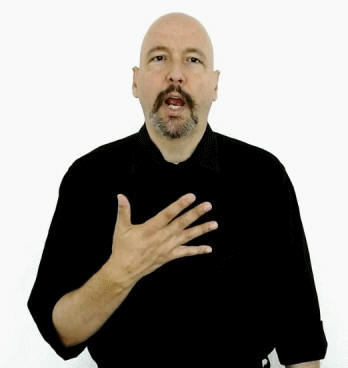
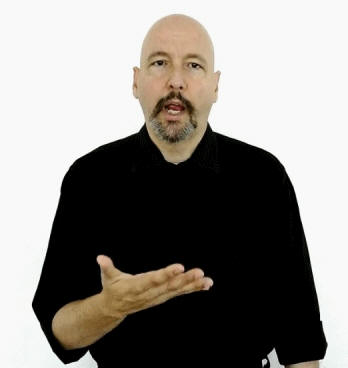


Note: If you draw out or extend the sign (CONFESS or WILLING) doing so can
add the meaning of "reluctantly, hesitantly, grudgingly."
For example to sign "grudgingly admitted" do the sign CONFESS in a drawn out,
hesitant, grudging sort of way. The same applies to the concept of
"reluctantly willing."
Note: "poppysmic" and the sign for ADMIT:
The following isn't a rule. Those if you are reading
this please don't start claiming that the following the "right" way to sign
ADMIT. There are variations and I'm going to share a mildly interesting
variation with you:
The concept of "ADMIT" is sometimes accompanied
by a poppysmic (smacking of the lips) type of "ma" mouth movement (probably
evolved from the the "mit" portion of "admit."
Thus during a Deaf client plea bargaining someone
could sign: "IX WILLING ADMIT-[poppysmic-"ma"] IX fs-DID-IT"
Of course there are other micro-variations that
could be used to distinguish WILLING vs ADMIT. For the ADMIT / confess concept
you could use two hands and splayed fingers along with a larger movement that
ends more palm up.
Remember though, just because you "can" choose to
vary your signing to create distinctions doesn't change the fact that ADMIT and
WILLING can be (and very often are) done the exact same way.
I will also suggest that etymologically (where the signs come from) "ADMIT"
seems somewhat more based on the concept of "get something off your chest" --
whereas WILLING seems to have some roots in "I'd be happy to..."
I suggest that because I've noticed that some signers (not that many but enough
to be noticeable) do a one-handed version of HAPPY to mean "willing."
In reviewing videos I've also noticed that sometimes (not most of the time but
rather once in a while) the concept of "confess" uses the two hands with splayed
(spread) fingers.
So, this gets back to the idea of certain very similar signs being like a Venn
diagram wherein they overlap totally much of the time but there are areas in
which they do not overlap.
Notes: See: ADMIT
See: WILLING
See: PROVE
See: RECOGNIZE
See: TELL
Notes: