The sign for "Sunday" has several popular versions.
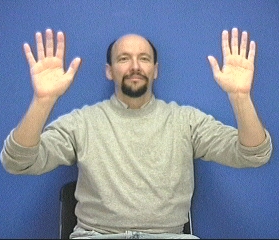
SUNDAY: (version)
Hold your hands up about head high and then move your right hand in a clockwise circle and your left hand in a counterclockwise circle as if you were washing a window with both hands:
0:00 / 0:00
SUNDAY: (Other version)
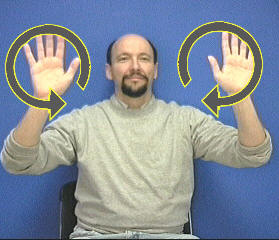
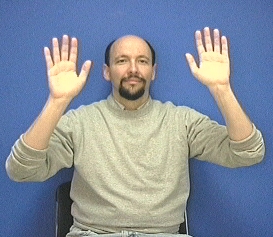
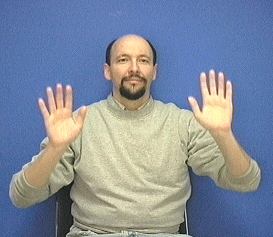
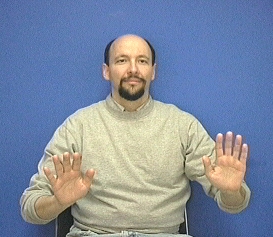
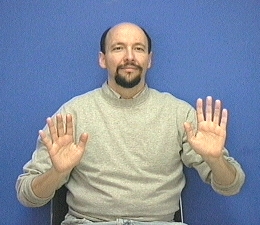
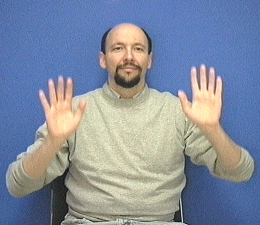
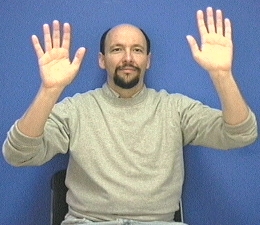
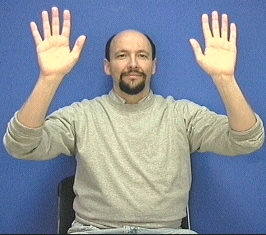
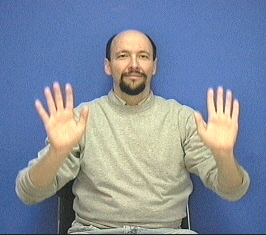
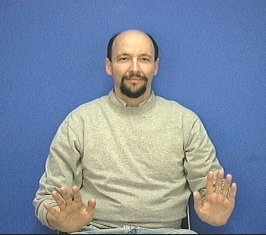
Hold your hands up, palms forward, "5 handshapes" in front of and to the sides of your head. Bring them down to your torso area. The movement from top to bottom forms a backwards arc.
0:00 / 0:00
SUNDAY:
(Yet another version.)
This version starts at your torso, arcs in a bit (back towards your chest) and out again at about head height.
0:00 / 0:00
EVERY SUNDAY:
In this version of the sign, when you bring the hands down you bring them straight down without arching them in toward your body.
0:00 / 0:00
Notes:
Some people do the sign "WONDERFUL/great" to mean Sunday. I do not recommend doing that.
Why choose to sign in a confusing manner? There is no need, we already have other versions that work well and do not conflict with "wonderful."
Version 2: WONDERFUL-[version 2] / SUNDAY-[version 2]
0:00 / 0:00
WONDERFUL and SUNDAY have been on my radar for many years (30 or more).
One time at a church function (potluck dinner) a whole tableful of DEAF churchgoers (8 or so people) got into a wonderful (ha) argument over the sign for SUNDAY. It got so heated that one lady rose from her seat and adamantly showed "her" version insisting that it was the right one. Moral of the story? SUNDAY is a multi-articulation sign. (It is signed various ways.) For what it is worth I tend to use the circular version of SUNDAY precisely because it has the least overlap with version 2 of WONDERFUL.
SUNDAY has multiple versions. The circular version, the higher to lower version, and the much less common lower to higher version which shows up enough that interpreter trainees need to be informed of it and add it to their recognition vocab.
WONDERFUL: Has two main versions: Recommended: the double high-fives version. I personally don't recommend the higher to lower version but interpreters had best recognize it: WONDERFUL also shows up in a lower to higher version. Additionally, very important: When used as an adjective that qualifies something specific, contributing detail and description the sign WONDERFUL is often done with a single movement. For example: "We had a wonderful time at the beach."
The double movement shows up more often when WONDERFUL is used as a standalone reply. A double-movement WONDERFUL tends to convey positive acknowledgment, approval, delight, or agreement.
Example: "We just booked our tickets!" Reply: "Wonderful!"
See: WONDERFUL
See: MONDAY / TUESDAY / WEDNESDAY / THURSDAY / FRIDAY / SATURDAY
Notes:
Where this sign is taught:
Taught in Lesson 12.Reviewed in lessons: 28, 38